Stock Market Tip For Market Research And Better Trading Skills
Understanding the stock market requires more than following daily price movements. Investors and traders need to study companies, understand market conditions, review financial information, and develop a structured approach before making decisions. Practical Share Market Tips can help investors focus on research, risk management, and disciplined market participation.
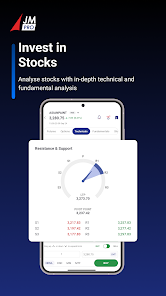
Stock Market Tips can cover areas such as understanding financial statements, studying price movements, managing available capital, and avoiding decisions based only on short-term market activity. These tips are not guarantees of returns. Every investment or trade involves market risk, so decisions should be based on research and individual financial circumstances.
Understand the Basics of the Stock Market
Before actively participating in the market, investors should understand how stocks work and how exchanges facilitate buying and selling.
A stock represents ownership in a company. When investors purchase shares, they become shareholders according to the number and type of securities they hold. The market price of a share can change because of company performance, economic conditions, industry developments, investor activity, and other factors.
Learn Different Market Segments
The stock market includes different types of securities and trading segments. Investors should understand the difference between equity investing, derivatives, exchange-traded funds, and other available instruments before using them.
Each segment has its own characteristics and risks. Beginners should learn the basic mechanics of an instrument before committing capital.
Conduct Research Before Buying a Stock
One important Stock Market Tip is to research a company before purchasing its shares. Looking at the current share price alone does not provide enough information to assess an investment.
Investors can review the company's business model, financial performance, debt levels, cash flows, industry position, and future plans.
Review Financial Statements
Financial statements can provide information about revenue, expenses, profit, assets, liabilities, and cash flows.
Investors should review financial performance across multiple periods instead of relying on a single quarter or year. Changes in revenue, profitability, and debt can provide useful context about a company's financial position.
Understand the Business
Investors should know how the company makes money and what factors influence its revenue and expenses.
Understanding customers, competitors, suppliers, regulations, and industry conditions can help investors assess the broader environment in which the company operates.
Use Price Data Carefully
Price charts can provide information about historical market movements. Traders may use charts to study trends, support and resistance levels, volume, and other technical indicators.
However, historical price patterns do not guarantee future performance.
Understand Trading Volume
Trading volume represents the number of shares or contracts traded during a specific period. Changes in volume can provide context about market activity.
Investors should avoid interpreting volume in isolation. It is more useful when considered alongside price movements and other relevant information.
Avoid Relying on One Indicator
No single technical indicator can provide a complete view of a security. Investors who use technical analysis should understand what each indicator measures and its limitations.
Combining market data with company fundamentals and broader market information can provide a more complete research process.
Create a Trading Plan
Another useful approach is to establish a plan before entering a trade. The plan can include the security being considered, intended position size, entry conditions, potential exit conditions, and acceptable level of risk.
A predefined approach can reduce decisions made purely in response to sudden price movements.
Decide the Position Size
Position size determines how much capital is exposed to a particular trade or investment.
Investors should consider the position in relation to their overall portfolio and available capital. Concentrating a large portion of capital in one security can increase the impact of an adverse price movement.
Consider the Holding Period
Investment decisions should match the intended time horizon. Long-term investors may focus more heavily on business fundamentals, while short-term traders may place greater emphasis on price movements and market conditions.
Mixing these approaches without understanding their differences can create confusion when making decisions.
Manage Risk Before Chasing Returns
Risk management is an important part of market participation. Investors should consider how much capital they can afford to expose to market fluctuations.
One of the practical Share Market Tips is to avoid using money required for essential expenses for speculative market activity.
Diversify Where Appropriate
Holding investments across different companies, sectors, or asset categories can reduce dependence on the performance of one security.
Diversification does not eliminate market risk, but it can reduce the effect that a single holding may have on the overall portfolio.
Understand Leverage
Leverage can increase market exposure by allowing investors to control a larger position with a smaller amount of their own capital.
It can also increase losses. Investors should understand margin requirements, financing costs, and potential obligations before using leveraged products.
Avoid Emotional Trading Decisions
Market prices can move sharply during periods of uncertainty or high activity. Investors may feel pressure to buy after a rapid price increase or sell during a sudden decline.
Making decisions solely because of fear, excitement, or market discussions can result in transactions that do not match an investor's original plan.
Avoid Following Unverified Tips
Online platforms can contain stock recommendations and market predictions from many sources. Investors should verify claims using reliable financial information before acting on them.
A recommendation without supporting research does not provide enough information to determine whether a security fits an individual's financial objectives.
Review Your Investments Regularly
Investors should periodically review their portfolio rather than constantly reacting to daily price movements.
A review can include checking company results, changes in business conditions, portfolio allocation, and whether each holding still fits the original investment reasoning.
Maintain Transaction Records
Keeping records of purchases, sales, charges, and investment dates can make portfolio reviews easier.
Accurate records can also help investors understand their overall investment performance and transaction costs.
Learn From Trading Mistakes
Developing better market skills takes time. Investors can maintain a trading or investment journal to record why they entered a position, what assumptions they made, and what happened afterward.
Reviewing these records can help identify repeated mistakes, such as entering trades without sufficient research, taking excessively large positions, or ignoring predefined risk limits.
Learning from previous decisions is more useful than trying to avoid every possible loss, because losses can occur even after careful research.
Use Reliable Market Information
Investors should distinguish between information and opinion. Company filings, financial statements, exchange information, and official announcements can provide a stronger basis for research than unverified online claims.
When using market applications or financial websites, investors should understand whether information is real-time, delayed, estimated, or historical.
Conclusion
Practical Stock Market Tips can help investors develop a more structured approach to market research, trading, and portfolio management. Studying company fundamentals, reviewing price data, managing position sizes, and understanding market risks are important parts of informed decision-making.
Useful Share Market Tips should support research rather than replace it. Investors should create a clear plan, verify information, protect their capital, and review their decisions regularly. Stock market participation involves uncertainty, so developing sound research habits and understanding personal financial objectives can help investors approach market decisions with greater awareness.